FINDING RELIABLE POLITICAL POLLS

My book, “Proud to be American,” is on sale at Amazon and also can be ordered at any bookstore for $17.95.  It’s a 330-page paperback book with 70 articles in nine categories, 70 pictures, and a provocative introduction and conclusion. It analyzes national, international and domestic problems and also critiques Mainstream Media and the far left of the Democrat Party.

My quest for reliable polls began with the presidential polls used for the 2016 presidential election.  With only two exceptions, they were completely wrong.  If you knew those two exceptions in advance, you could have predicted the outcome of the election.  I did so and therefore was 75% certain that Donald J. Trump would become our next President.  It was really simple:  I looked at the polls that accurately predicted the previous (2012) presidential election.  There were only two, one of which polled daily, the Rasmussen Daily Presidential Tracking Poll.  Therefore, I only believed the Rasmussen poll.

BODY

I initially thought that the reason for the poor poll results was simply the biased media funding fake polls in order to create a bandwagon effect (“push polls”) for their politician.  However, I decided to examine polls and find out why they differed so much.  The following is what I learned:

a) The design of a poll can easily create any outcome the pollster wants.  For example, the pollster determines what percentage of Democrats, Republicans, and Independents to use in his or her polls.  These percentages largely determine the results of a poll.  Most of the recent polls used 24% of Republicans although the 2016 and 2018 election exit polls showed 33% of Republicans voted…which explains why the polls were so wrong.

b) Whether a poll is of: a) all adults, b) registered voters, or c) likely voters,  is the next most important factor in determining the results of a poll.  Only half of all adults vote, 80% of registered voters, and over 90% of likely voters vote.  The most accurate poll of Presidential elections has been the Rasmussen daily presidential tracking poll which polls “likely” voters.

c) The way in which poll questions are worded can significantly influence the results of the poll.  For example, a question can be worded: 1) do you approve of the President? OR 2) do you approve of the President’s job performance? OR 3) do you like the President? OR 4) etc., etc., etc.  Often poll questions are deliberately ambiguous and therefore the results can’t be trusted.

d) How many people you poll is very important in order to get a representative sample.  Nothing under a 1000-person-poll is very reliable.

e) How you select the people to be polled is very important.  For example, only selecting people from the inner city would result in an overwhelming number of people favoring a Democrat and would not be a representative sample.  Same is true for a poll conducted of New Yorkers only.

f) Who is sponsoring the poll is extremely important.  A poll funded by the New York Times, Washington Post, or CNN will not depict a Republican President favorably because those newspapers and that TV station have a partisan agenda and are therefore unreliable.

CONCLUSION

I’ve attempted to show how polls can be manipulated to shape public opinion rather that gauge it.  I believe that most political polls are seriously and deliberately flawed and therefore I don’t believe them to be reliable.  Past performance is the best way to judge a poll.  For example, the Rasmussen Daily Presidential Tracking Poll I used to believe to be the best of all of the Presidential polls, based on its past performance in both the 2012 and 2016 presidential elections.  In 2020, the Trafalgar poll was very accurate.  In 2024, the “Insider Advantage” and the “Trafalgar” polls were the most accurate. . Looking at past performance, therefore, is the quickest and easiest way to determine how accurate or misleading a poll is.


CRITERIA/STANDARDS FOR CHOOSING A PRESIDENT

My book, “Proud to be American” is on sale now at Amazon for $17.95 and can also be ordered from any bookstore.  It’s a 330-page paperback book that contains 70 of the best articles on my blog in 9 categories with 70 pictures. My book analyzes national, international, and domestic problems and also critiques Main-Stream Media and the far left of the Democrat Party.

Many believe that politics is stupid because of all of the partisan bickering that goes on.  That may or may not be true, but it’s irrelevant…our President makes decisions that affect not only us, but our children, grandchildren, and many other countries around the world.

Based on the controversy of the previous Presidential elections, I developed the following non-partisan criteria for selecting a President.  I came up with them after looking at everyone else’s and concluding that they were inadequate.  My qualifications for doing this are: 1) I followed politics since 1960, 2) my Masters degree from the University of Pennsylvania is in Government Administration, 3) my graduate courses in program analysis and evaluation and law, and 4) working for the Federal, State and local governments for 44 years.  My seven  criteria for choosing a President are listed below and are prioritized and listed in the order of their importance:

1. POSITIONS ON ISSUES:  this criterium is by far the most important reason why one should select one presidential candidate over another.

2. EXPERIENCE: there is no job exactly like the presidency but there are some jobs that provide relevant experience.  It’s not a coincidence that seventeen of our U.S. Presidents have been Governors of a State.  Being a Governor provides the best experience for the presidency, however any executive or managerial experience is relevant and useful.  High-level military experience is also good.  Legislative and legal experience is useful but not ideal.  Check out the accomplishments of the candidate.

3. EDUCATION: A masters degree in either Government or Business Administration is probably the most relevant education a President could have.  A law degree is helpful.  Business education is also helpful.

4. OPEN-MINDEDNESS:  In U.S. politics, the politician is either on the left or the right and this ideology can be constraining at times for finding the best solutions to a problem or dilemma, so willingness to “go-across-the-aisle” and being a good listener can be a great asset for a president.

5. INTEGRITY: one of the important qualities but not so common in many politicians.  This is important because the President may ask the Country to go to war or to make some other sacrifice, so we need to be able to trust him or her and not think that whatever is being done is for political purposes.

6. PUBLIC SPEAKING and CHARISMA: for his “bully pulpit” duties, a President would be well-served by being a master of the spoken word, and if he or she is charismatic as well, so much the better.

7. HEALTH (physical & mental): sufficient physical health to travel around the world and throughout the U.S., as well as adequate mental health to make good decisions.

CONCLUSION

You may agree or disagree with my seven criteria or perhaps you simply may want to add a few more.  Whatever…but it is important to have criteria (or standards) to use, otherwise you’ might do what many people do: vote solely by political party, vote because of something irrelevant like age, gender, physical appearance, ethnicity, race, or emotions. While most elections don’t matter that  much, the 2016 Presidential election was one of the most important in U.S. history, and the 2020 Presidential election was also very important, but in a negative way because it reversed many of the great achievements of former President Trump.  It appears that a majority of voters used valid and good criteria in voting in the 2024 Presidential election..

It used to be relatively easy to carefully consider my aforementioned seven criteria in judging presidential candidates.  With today’s partisan media, it’s difficult to get accurate information, but it can be done with effort.  The fate of the U.S. depends on who you vote for.


WILL PRESIDENT TRUMP BECOME OUR GREATEST PRESIDENT?

My book, “Proud to be American”, is on sale now at Barnes and Noble and Amazon for $16.95. It’s a 300-page paperback book with 68 articles in nine categories and 70 pictures. My book analyzes national, international, and domestic problems and also critiques Main Stream Media and the far-left of the Democrat Party. 

I believe that President Trump will become our greatest president. Let’s take a look…

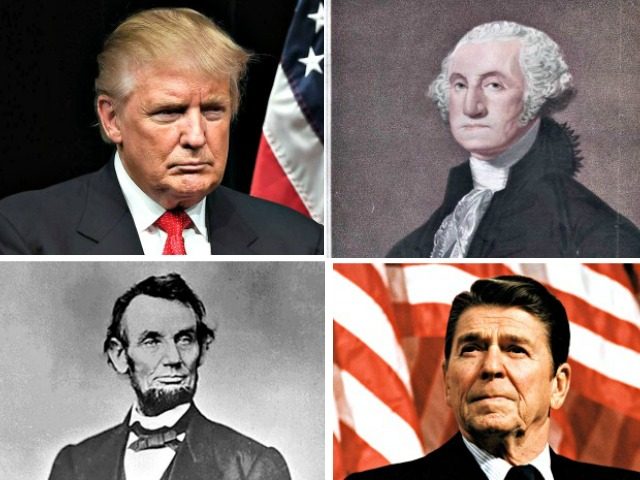
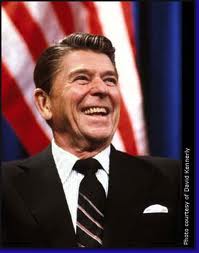
George Washington was our greatest President…without him there would be no United States of America.  Abraham Lincoln was our second greatest for ending slavery and preventing the South from seceding from the Union and therefore keeping the United States as one country.  Ronald Reagan was our third greatest because America was in a huge mess after Jimmy Carter’s presidency and he turned it around by cutting taxes and Federal regulations which grew the economy, and by rebuilding our military to the extent that the Soviet Union collapsed.  The Gross Domestic Product (which is the measure of the size of the economy) almost doubled in the ten-year period from the time Reagan’s cuts in tax rates went into effect (1983).

I believe that Donald Trump will become our greatest President: he already knows the best policies to pursue for the U.S. to prosper…how to create a great economy, eliminate Federal budget deficits, handle sticky international problems, and strengthening our military, including getting the last 20 Israeli hostages freed and ending illegal immigration into the U.S.  He perhaps can improve his dealing with Democrat leadership and the Propaganda Media and be more careful in his choice of words to protect himself from the “Deep State” and the likes of Dick Durbin, Nancy Pelosi, Chuck Schumer, Adam Schiff, etc.

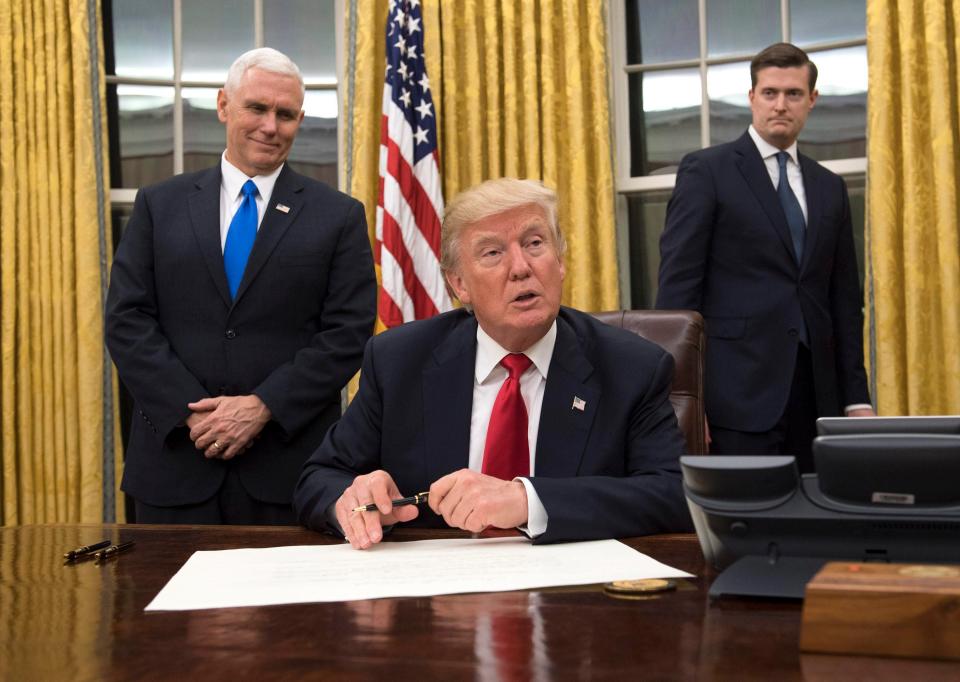
A few of the President’s major accomplishments in his first term include his initiating  and signing the Tax Cuts and Jobs Act, which stimulated the U.S. economy, big time.  This came as President Trump terminated thousands job-killing useless regulations, initiating a huge increase (10 trillion dollars) in the Stock Market, creation of 7 million new jobs, low unemployment rate (3.5 %), increases in the Civilian Labor-Force Participation Rate, and growth in the Gross Domestic Product.  Moreover, by giving the military more flexibility in fighting ISIS, areas formerly held by ISIS were recaptured.  President Trump built an illegal-immigration-stopping wall on our southern border and attempted to end chain migration and VISA-lottery immigration.  He also made huge increases in the military budgets for both FY 2018, ’19 and ’20, which significantly improved the military’s strength and readiness.  He also negotiated great trade deals with China, Mexico, Canada, Japan, South Korea, etc. and cracked down on China’s intellectual theft from America.  He created 9,000 economic opportunity zones in inner cities and other poor areas and passed prisoner reform legislation to help prisoners be treated more fairly.  Despite massive resistance, President Trump also temporarily stopped travel from China to the United States on January 31, 2020, in order to slow down the spread of the Coronavirus from China to America. Finally, in his first term he appointed three excellent Supreme Court justices and creatively using financial incentives, had Covid-19 vaccines developed in record time.

What does President Trump still need to do in his second term to become the greatest President in U.S. history?  I believe that Trump made America great again despite everything the mainstream media and the Democrat Party did to stop him, like four ridiculous indictments. I think that Trump’s political enemies will be somewhat responsible for how he becomes great.  There is a simple Arab saying that makes it clearer, “the greater your enemy, the greater the victory over that enemy.”  President Trump has many powerful enemies.

After seeing what President Trump has accomplished in his first term, and watching him make scores of more improvements at his “Trump Speed” what else does he still need to do?  This is what I believe he should do:

  1. Continue eliminating ineffective government programs and agencies and reducing the size of the Federal workforce, especially the IRS.
  2. Eliminate annual budget deficits and make a plan to pay down the National Debt.
  3. Continue rebuilding the military to be stronger than it ever has been to counter China and stop its intellectual theft from America.
  4. Significantly reduce or eliminate the opioid crisis,
  5. Expose and end election and voter fraud,
  6. Continue revitalizing and making safe depressed inner cities,
  7. Clean up corruption in government and political parties,
  8. Continue appointing more conservative judges,
  9. Be more congenial, criticize in private, praise in public.
  10. Add more Middle Eastern countries to the Israel-Arab Abraham Accords, especially Saudi Arabia.
  11. Deport the illegal immigrants who are rapists, murders, and other criminals and possibly all of the recent illegal immigrants.

In today’s partisan political climate, it’s difficult to get much accomplished without great effort, but President Trump has gotten many things done despite his many enemies. We’ll know in a few years just how great a president, President Trump was.  He has significant headwinds from Mainstream Media which has become completely corrupt, and election fraud which has become massive and pervasive.  Since Mainstream Media hasn’t changed, the outcome of the presidential election depended mostly on how much of the election fraud was prevented.  Thank you Lara Trump and the 230,000 volunteers that stopped the steal enough in the 2024 presidential election for Donald J. Trump to become our 47th president.

My book…for further reading

CAN PRESIDENT TRUMP GROW THE ECONOMY AND LOWER INFLATION AGAIN?

My book, “Proud to be  American”, is on sale now at Barnes  and Noble and  Amazon for $16.95.  It contains 68 of my best articles in 9 categories plus a provocative introduction and conclusion in a 300-page paperback book.

CAN TRUMP DO IT AGAIN?  LET”S CONSIDER THE FOLLOWING:

After most recessions, Gross Domestic Product (GDP) growth comes back with  a strong minimum 5% increase/year.   But not the recession of 2008-09…annual growth averaged under 2% for the eight years that Barrack Obama was President and the Civilian Labor Force Participation Rate diminished to 62.8%, the lowest it had been since 1978.  Moreover, although the official unemployment rate was under 5%, it would have been about 12% if it were measured the way it was back in the year 2000, and over 20% if it were measured the way it was during the Great Depression in the 30’s.
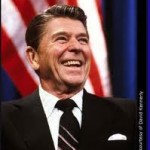
So what happened under President Obama?  Why not the usual strong growth?  Business had  a few trillion dollars that it held onto oversees, so why didn’t it spend its money to expand its operations and create millions of jobs in the U.S.?  There’s a lot of  reasons why business was cautious in expansion…and we need to understand what the problem was in order to continue to turn around today’s economy and foster substantial job growth (and the increased tax revenues that come with job growth).  Of course, the Affordable Care Act (“Obamacare”) is filled with disincentives to job growth, especially full-time jobs, so it was partially responsible. The large number of regulations and tax increases under President Obama also added additional burdens on job creators and that’s another major cause.

But who am I to be pontificating on jobs and the economy?  Well, I do have a masters degree in Government Administration from the University of Pennsylvania.  And my degree is from the Wharton School in the U. of P., which is known for its econometric models of the economy.  To be clear, however, my education was in government, not economics, though I did need to have economics and accounting courses as well as a statistics course in order to graduate from Wharton with my MGA long ago.  Moreover, I also worked for the Federal government for over40 years in various capacities, and have also worked for the state of Pennsylvania and the city of Philadelphia.

FORMER  SUCCESSFUL QUICK RECOVERIES

Let’s put aside education and experience qualifications because, from my observations, ideology trumps education.  I’ve seen PhD’s advocate really stupid positions, even in light of contradictory evidence.  So I tend to look at the real world, what actually happens when a particular economic policy is followed and practiced.

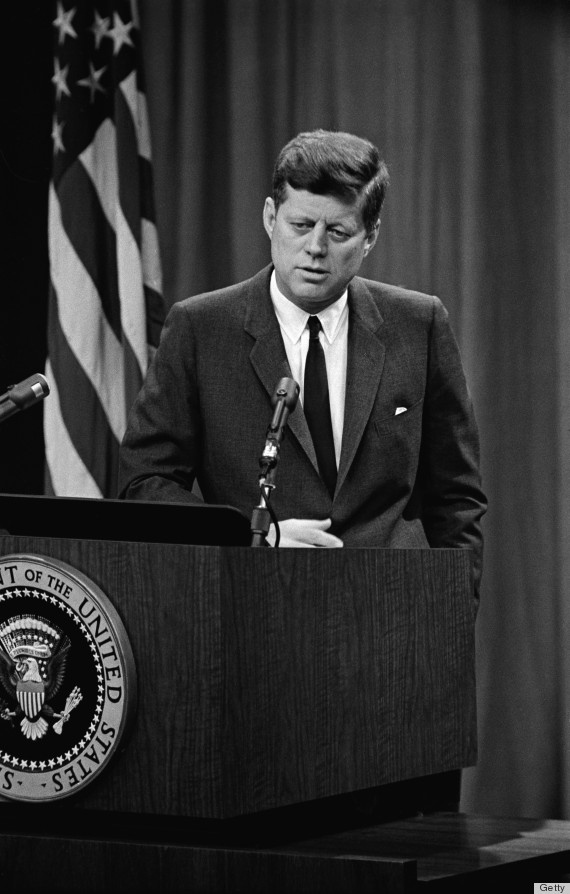
I’ll start with the policies used by President John F. Kennedy in the early 1960s.  When confronted with a recession, he cut tax rates which led to increased economic growth and recovery.  In addition, when President Ronald Reagan inherited the worst recession since the Great Depression from President Jimmy Carter in 1980 (unemployment over 10%, inflation 13.5%, mortgage interest rates up to 20%), President Reagan cut tax rates to the extent that GDP almost doubled in ten years and tax revenues to the Federal government greatly increased in the 10 years following the tax rate cuts.  President George W. Bush had a similar experience with tax rate cuts, revenues to the Federal government significantly increased.

The most recent successful economic recovery was orchestrated by President Trump with cuts in taxes and regulations, which resulted in an extremely low unemployment rate of 3.4% and the lowest unemployment rates in U.S. history for African-Americans, Hispanic-Americans, and Asian-Americans.

PAST FAILURES

Let’s look at what actually happened when the opposite approach was used:  it is estimated that President Franklin D. Roosevelt doubled the duration of the Great Depression in the 1930’s by using the John Keynes economic model of increasing government deficit spending, and the US still did not even get out of the Great Depression until World War II (because of WW II).   Moreover, when Japan’s economy went bust in the 90’s, it spent trillions over a 20-year period trying to stimulate its economy.  The huge deficit spending did nothing except give Japan a huge debt.

WHAT PRESIDENT OBAMA TRIED
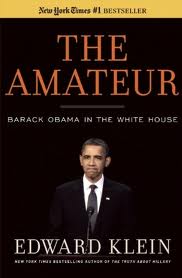
Which brings us up to to when President Barrack Obama spent almost a trillion dollars in his “stimulus” package in a effort to turn around the economy…and he also devalued the dollar by having The Federal Reserve Bank print trillions of dollars with no backing through it’s so-called Quantitative Easing 1, 2, and 3.  He also tried other short-term Federal spending programs such as his “cash for clunkers” and engaged in huge annual deficit spending, the extent of which had never been seen before.  His economic policies, based on the discredited theories of economist, John Maynard Keynes, actually made the economy worse by piling up huge government debt (over $20 trillion in total national debt which is greater than the annual GDP of the US), with very little to show for it,  and whose interest payments will be unsustainable when interest rates increase.

Let’s look at other factors significantly adversely affecting the economy, such as oppressive government regulations.  One of the reasons for President Bill Clinton’s economic success in the 1990s was his significantly cutting back many Federal Regulations (as well as the reduction in government employment through attrition) as part of his “National Performance Review” initiative.  President Obama’s policy, on the other hand,  on preventing drilling for oil in the Gulf of Mexico, has resulted in 240,000 barrels/day less oil from the Gulf,  which would have led to large increases in gasoline prices were it not for oil companies engaging in horizontal drilling and fracking on private and State lands.  Another example of over-regulation is the Dodd-Frank bill, the stated purpose of which was to prevent future financial meltdowns…but it did not even deal with the cause of the meltdown, Fannie Mae and Freddie Mac, who threatened  and coerced banks into making housing loans to people who could not afford to repay them.  Dodd-Frank also had adverse impacts on small banks and dried up loan money for small businesses that would have otherwise been available to them to expand.

Then there’s Obamacare which has been estimated to actually cost the government up to 3 trillion dollars in the first 10 years, as well as lead to very expensive, rationed and inferior health care.   Then, of course, there’s EPA’s over-regulations, such as the one on carbon dioxide, which as we know, is an inert gas, the chief purpose of which is food for plant life, plants which turn carbon dioxide into oxygen.  Moreover, let’s not forget how hundreds of thousands of farm hands were suddenly unemployed when the US Department of the Interior shut off the water to California’s Central Valley in an effort to protect the Delta Smelt (a small fish) that was on the Endangered Species list.  All of these things had severely hurt jobs.  Finally, President Obama extending unemployment benefits to 99 weeks actually increased unemployment because studies show that, on average, unemployment benefit recipients don’t even begin looking for work until 4 weeks prior to the end of their benefits.

IS CUTTING TAX RATES FAIR?

But stimulating the economy by cutting tax rates isn’t fair, is it?  Even President Obama said in an interview a year or so before he was elected President, when confronted with the fact that cutting the capital gains tax rate in the past had actually resulted in increased tax revenues to the Federal government, that he still would not cut the capital gains tax rate because “it isn’t fair.”

So is it fair to cut tax rates even though we know that the result would be to increase tax revenues?  The nation would then have more money to help the poor, not less, so why not do it?  I can understand the “equality” argument but  is it really a good thing if everyone were equally poor as they are in many countries?   “So what” if there are some super-wealthy people…we know that in the United States they will eventually give most of their money to charity anyway and do it much more wisely than the Federal government!   Winston Churchill said that  capitalism is a bad form of government except that it’s better than all other forms of government.

THE SOLUTION
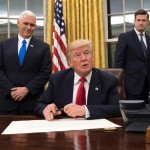
Cutting  tax rates and regulations have always worked in the past and stimulated the economy and thereby created many jobs.  Presidents Kennedy, Reagan,Bush and Trump all increased tax revenues by cutting tax rates for everyone.  Today, the bottom 50% of earners pay almost no Federal income taxes…the wealthiest 10 %, on the other hand,  pay over 70% of all Federal income taxes.  If you believe that’s not enough, how much is enough?  The U.S. corporate tax rate was 35% but Trump and the Republican Congress reduced it to its current 21% in Trump’s first term,  and it consequently led to many corporations moving their operations and jobs back from other countries and caused the United States to regain many jobs.  Now that Donald Trump has been re-elected President, it’s time for him to work his Wharton School “magic” again and bring back the economy again and drastically lower inflation.  I believe that President Trump can and will do it.